
Other Pests
Other Pests
EXTERMINATORS SPIDER CONTROL
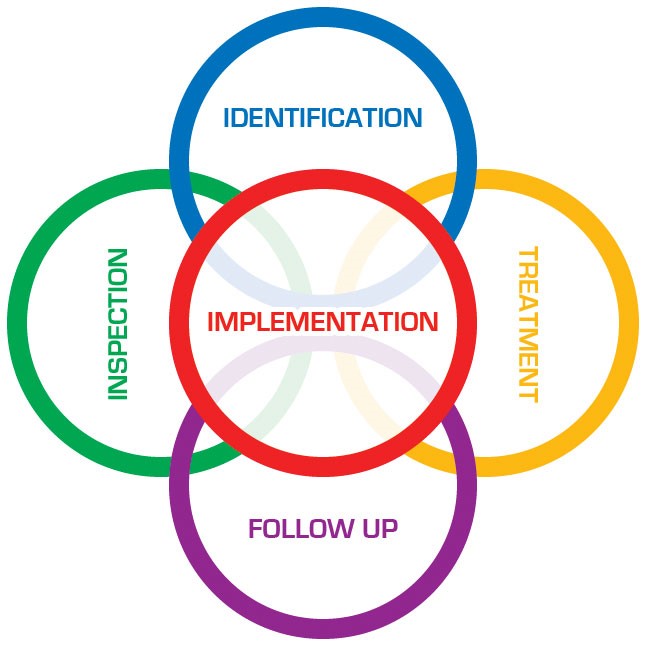
Every situation is unique, there is no single spider control program that will work in all cases. That’s why you need a ‘Exterminators Pest Spcialist’ with the experience and the tools to find the right one for you. Exterminators Spider Control begins by identifying the breeding and harborage areas. Combination of methods and tools will be carried to treat fly infestation.
Initial inspection to identify the breeding and harboring areas
Recomendation to improve sanitation
Recomendation to prevent spider entry
Design strategic spider management plan
Implemetation of the spider management stratergy
Follow-up and continues monitoring process
SPIDER FACTS
Fear of spiders is called Arachnophobia
It is one of the most common fears among humans
Spiders are not insects. Insects have three body parts and six legs
Spiders have eight legs and two body parts, the abdomen and the thorax
Not all spiders spin webs. Spiders belong to the Arachnid family
There are more than 30,000 species of spiders
Most spiders have either six or eight eyes
Spider bites can be quite painful, and a select few can be fatal
Spiders eat many types of harmful insects, helping to keep your garden free of pests
Webs get dirty and torn, so lots of spiders make a new one every day
They don’t waste the old one, though–they roll it up into a ball and eat it!
Young spiders resemble adults. Only their size and coloration differ
Male spiders are usually smaller than female spiders
The largest spider in the world is the Giant Bird-eating spider. One that was found had a leg span of 28 cm (11 inches)!
The smallest spider is the Patu Marplesi. You could fit 10 of them on the end of a pencil
Spider silk is possibly the strongest material in the world!
Scientists believe that if they gathered the same weight of spider web as a piece of steel, the web would be much stronger than the steel!
As hard as scientists try, they cannot match or copy the silk.
DUST MITES
Dust Mites are microscopic creatures that live in your bedding by the millions and cause allergies. Dust mites do not bite in the sense that they do not inflict a wound to obtain food. Dust mites feed exclusively on the dead skin cells that we shed every day in the form of dandruff and other flakes and particles. They are essentially scavengers, not predators or parasites.
EXTERMINATORS DUST MITE CONTROL
Every situation is unique, there is no single spider control program that will work in all cases. That’s why you need a ‘Exterminators Pest Spcialist’ with the experience and the tools to find the right one for you. Exterminators Dust Mite Control begins by identifying the breeding and harborage areas. Combination of methods and tools will be carried to treat fly infestation.
Initial inspection to identify the breeding and harboring areas
Recomendation to improve sanitation
Recomendation to prevent dust mite entry
Design strategic dust mite management plan
Implemetation of the dust mite management stratergy
Follow-up and continues monitoring process
FLEAS
There around 2380 species of fleas worldwide. Fleas are small & very specialized, adult fleas are blood suckers, the majority feeding on mammals & some feeding on birds. Fleas transmit disease from animals to humans. Historically, bubonic plague has claimed untold millions of human life. (The “Black Death” that occurred in the middle ages in Europe).
EXTERMINATOR FLEA CONTROL
Every situation is unique, there is no single flea control program that will work in all cases. That’s why you need a ‘Exterminators Pest Spcialist’ with the experience and the tools to find the right one for you. Exterminators Flea Control begins by identifying the breeding and harborage areas. Combination of methods and tools will be carried to treat fly infestation.
Initial inspection to identify the breeding and harboring areas
Recomendation to improve sanitation
Recomendation to prevent flea entry
Design a stratergic flea management plan
Implement the flea management stratergy
Follow-up and continues monitoring process
FLEA FACTS
Fleas are vectors of Bubonic Plague, carried from rodents to humans when they suck our blood
In an epidemic in Europe in the 14th Century 25,000,000 people died from the disease
That was over one-third of the entire population of that continent
This epidemic was part of a worldwide epidemic 1347 to 1351 over 75 million people died around the world
It epidemic reached Sri Lanka in 1367, killing thousands
TICKS
Although ticks are commonly thought of as insects, they are actually arachnids like scorpions, spiders and mites. All members of this group have four pairs of legs as adults and have no antennae. Adult insects have three pairs of legs and one pair of antennae. Ticks are among the most efficient carriers of disease because they attach firmly when sucking blood, feed slowly and may go unnoticed for a considerable time while feeding. Ticks take several days to complete feeding.
EXTERMINATORS TICK CONTROL
Every situation is unique, there is no ticks control program that will work in all cases. That’s why you need a ‘Exterminators Pest Spcialist’ with the experience and the tools to find the right one for you. Exterminators Ticks Control begins by identifying the breeding and harborage areas. Combination of methods and tools will be carried to treat fly infestation.
Initial inspection to identify the breeding and harboring areas
Recomendation to improve sanitation
Recomendation to prevent ticks entry
Design strategic ticks management plan
Implemetation of the ticks management stratergy
Follow-up and continues monitoring process
CENTIPEDES
Worldwide there are estimated to be 8,000 species of centipede of which 3,000 have been described. Centipedes have a wide geographical range, reaching beyond the Arctic Circle. Centipedes are found in an array of terrestrial habitats from tropical rainforests to deserts.
Within these habitats centipedes require a moist micro-habitat because they lack the waxy cuticle of insects and arachnids, and so lose water rapidly through the skin. Accordingly, they are found in soil and leaf litter, under stones and dead wood, and inside logs. Centipedes are among the largest terrestrial invertebrate predators and often contribute significantly to the invertebrate predatory biomass in terrestrial ecosystems
CATERPILLARS
Caterpillars are the larvae of butterflies and moths. Many are major pests but several merely make us curious as to what they are doing. There are many types of caterpillars and they feed in or on a broad array of trees and shrubs. Some are simple leaf feeders and others bore in tips or are leaf miners. Most feeding by caterpillars takes place in the later instars as they approach maturity. Small caterpillars are easier to control.
EXTERMINATORS CATERPILLAR CONTROL
Every situation is unique, there is no single spider control program that will work in all cases. That’s why you need a ‘Exterminators Pest Spcialist’ with the experience and the tools to find the right one for you. Exterminators Caterpillar Control begins by identifying the breeding and harborage areas. Combination of methods and tools will be carried to treat fly infestation.
Initial inspection to identify the breeding and harboring areas
Recomendation to improve sanitation
Recomendation to prevent caterpillar entry
Design strategic caterpillar management plan
Implemetation of the caterpillar management stratergy
Follow-up and continues monitoring process